A practical method for OEMs, distributors and fleet operators to compare battery systems on the missions they actually complete.
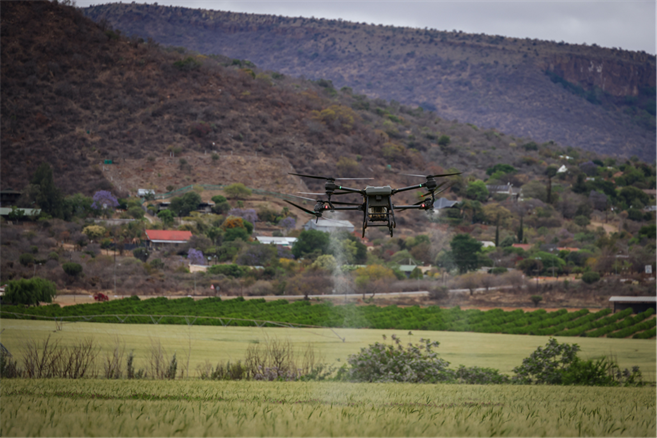
A mission cost model starts with accepted field output, then traces the battery sets, charging, handling and service life needed to produce it. Photo: Magda Ehlers / Pexels.
A battery set can look inexpensive on a quote and still become one of the largest recurring costs in a drone program. The useful number is not the pack price by itself. It is the battery-related cost of each mission the fleet actually completes and accepts.
That calculation changes the conversation between a buyer and a battery supplier. It asks how many usable missions a pack supports in the real duty cycle, how much energy reaches the charger, how much staff time each turnover takes, and what happens to the cost when a mission is aborted or a pack is retired early.
Start with the mission your customer accepts
Define the denominator before adding costs. For an inspection operator, one mission might mean a completed asset inspection with usable images. For an agricultural fleet, it might mean one completed field block at the required application rate. A launch that returns without an accepted result is an attempt, not a completed mission.
Use this practical fleet metric: battery-system cost per accepted mission = all battery-related costs incurred during the measurement period ÷ accepted missions completed during that period. Keep the full aircraft mission cost as a separate metric. Pilot time, vehicle travel, payload depreciation, insurance and software belong in the full mission budget, while the battery metric helps buyers compare pack and charging choices.
Count battery costs consistently: pack purchases and replacements; replacement freight and handling; electricity measured at the wall; charger or battery-station depreciation; battery inspection and maintenance labor; and costs from battery-caused retries or canceled work. If an attempt is aborted because of a battery issue, its cost stays in the numerator while only accepted missions count in the denominator.
A transparent example you can replace with your own data
The example below is a planning model, not an industry average or a supplier quote. It assumes one matched two-pack set supports 320 accepted mission-equivalents over its service life. A mission-equivalent means one measured full-discharge workload for the matched set; if your mission uses two battery sets or several partial sorties, convert actual battery throughput into equivalent full cycles.
The electricity input uses $0.14 per kWh as a rounded reference. The U.S. Energy Information Administration reported a preliminary 2026 year-to-date U.S. commercial average of 13.97 cents per kWh through July [1]. A field operator should substitute its own bill, demand charges, generator fuel or local tariff. The remaining values are explicit illustrative assumptions.
| Cost item | Transparent input | Calculation | Per mission |
| Battery set purchase price | $2,400 per matched set | $2,400 ÷ 320 accepted mission-equivalents | $7.50 |
| Electricity at the wall | 2.8 kWh per recharge; $0.14/kWh | 2.8 × $0.14 | $0.39 |
| Battery handling labor | 5 minutes; $30/hour loaded labor | 5 ÷ 60 × $30 | $2.50 |
| Charger allocation | $4,000 charger system; 3,200 charges | $4,000 ÷ 3,200 | $1.25 |
| Replacement logistics | $150 per replacement set | $150 ÷ 320 | $0.47 |
| Illustrative total | Battery-related cost per accepted mission | Sum of included lines | $12.11 |
The arithmetic is visible: $7.50 + $0.39 + $2.50 + $1.25 + $0.47 = $12.11 per accepted mission. If the fleet completes 1,000 accepted missions under these assumptions, the battery-related budget is about $12,110. The number scales with your inputs; it does not describe what every industrial fleet pays.
Battery life drives the result more than electricity
In this model, the battery set costs $2,400. At 320 accepted mission-equivalents, pack acquisition contributes $7.50 per mission. If early retirement, demanding loads or a conservative health threshold cuts the realized total to 160, the pack contribution rises to $15.00. If the set supports 480 accepted mission-equivalents, it falls to $5.00. Those are sensitivity cases, not cycle-life claims.
The distinction between rated cycles and accepted mission-equivalents matters. A cycle count is meaningful only when its test conditions and end-of-life definition are known. The operator’s usable life can also end because of elapsed time, storage exposure, a damaged enclosure, cell imbalance, a BMS fault or a warranty rule. DJI, for example, lists 12 months, 400 cycles and 120 days of high-power storage as TB65 service-life criteria, with whichever comes first controlling [2]. That is a rule for that product family, not a universal UAV battery standard.
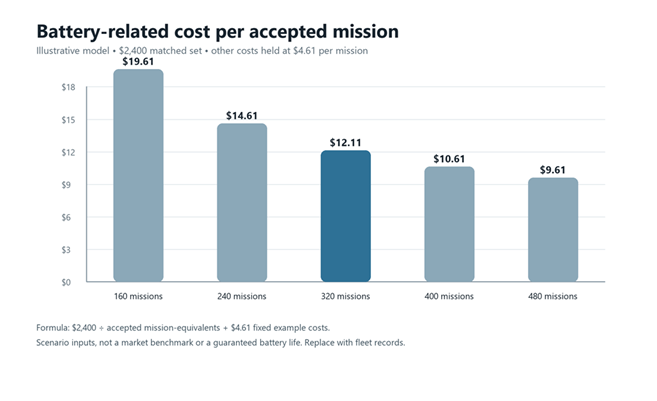
Figure 1. Cost sensitivity to realized battery-set life. The 320-mission case matches the worked example; other bars are planning scenarios, not observed life data.
The chart holds the other example costs fixed at $4.61 per mission and changes only the number of accepted mission-equivalents delivered by the $2,400 set. It shows why a small difference in realized battery life can outweigh a few cents of electricity. Your own model should use pack-level service records, including time-based retirements and battery-related mission failures.
Measure charging energy at the wall
Do not calculate energy cost from the pack’s nameplate watt-hours alone. The aircraft does not necessarily use the full nominal energy, charging adds losses, and some charging stations consume power while idle or conditioning batteries. A plug-in energy meter or station telemetry gives a better kWh-per-turnaround figure. Multiply that measured energy by the tariff that actually applies at the operating site.
For fleets using generators, solar-plus-storage or temporary field power, record fuel or system operating cost instead of assuming a utility tariff. Where the bill includes a demand charge, allocate that charge across the operations that caused the peak rather than hiding it inside a national average.
Put people and spare inventory in the model
Five minutes of battery work sounds small until it repeats hundreds of times. Record the time to cool, inspect, swap, connect, charge, log and return a pack to service. Multiply by the loaded labor rate for the team that performs the work. If two people handle a set or a remote site requires extra checks, use the observed time rather than a desk estimate.
A fleet also buys availability. Spare sets waiting on a shelf tie up cash, while too few sets can leave an aircraft idle between sorties. Track how many sets are assigned to each aircraft, how many are in charging or inspection, and how many are held as ready spares. For a broader ownership view, add the cost of financing that inventory and the charger stations; do not count the full spare-set purchase twice if its eventual replacement cost is already amortized across the missions it supports.
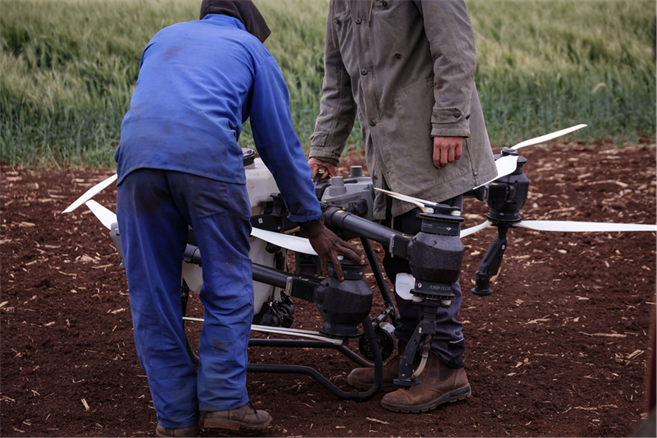
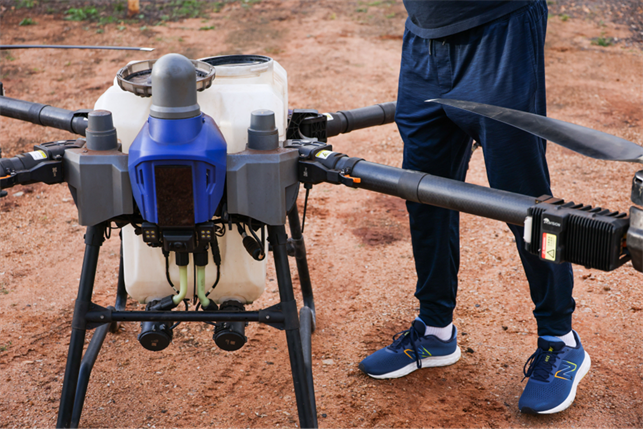
A realistic labor input includes the handling and inspection steps around each turnaround. Photo: Magda Ehlers / Pexels.
Separate direct battery cost from downtime
The $12.11 example is a direct battery-system cost. It does not include the value of lost work when a mission waits for a charge, a battery is quarantined or a replacement shipment misses a spray window. For operations with short weather or customer windows, report a second metric: cost per accepted mission including battery-related downtime and recovery.
That second metric needs a clear rule. Measure battery-caused idle hours, canceled jobs, reflight time and any service credits or customer penalties. Avoid assigning every delay to the battery: weather, airspace, payload, crew and network interruptions should be coded separately. Good reason codes make a supplier review productive instead of anecdotal.
The Buyer Checklist for a Defensible Quote
Ask a battery supplier for the data needed to populate the model: pack configuration and usable energy; continuous and peak current; charging limits and typical recharge energy; cycle-life test conditions and end-of-life threshold; temperature limits; warranty exclusions; service criteria by time and cycles; BMS data available for fleet tracking; replacement lead time; and shipping cost for the target market.
Then give the supplier the mission profile: aircraft and payload, expected discharge per sortie, sorties per day, dispatch notice, charging window, ambient temperature, storage pattern and the planned retirement threshold. A pack designed for a short high-current lift duty cycle may have a different cost per accepted mission from a pack used for longer, lower-power survey flights, even if their quoted watt-hours are similar.
Use the number to make a better fleet decision
A practical cost-per-mission review does not reward the cheapest pack or the largest cycle-life claim by default. It compares complete battery sets on the same accepted-mission basis and shows which input moves the result: realized service life, charging energy, labor, charger utilization, logistics or downtime.
Start with a month of fleet records if lifetime data are not yet available. Record each set’s serial number, energy delivered at the wall, accepted missions supported, handling minutes, health checks, retirement reason and battery-related aborted attempts. Update the model as the fleet learns. For OEM projects, share that duty cycle with the battery supplier before locking the pack specification; it is the clearest route to a quote that reflects the mission rather than a datasheet alone.
Planning a new UAV battery program? Share your aircraft and payload, energy per sortie, daily mission count, charging window and target service-life criteria with LINKAGE. The team can use that duty cycle to scope a battery pack and a quote that fits the operating plan.
References
[1] U.S. Energy Information Administration, Electric Power Monthly, Table 5.3
[2] DJI Matrice 350 RTK FAQ, TB65 product-specific service-life criteria