Heavy-Lift Drone Batteries: Why Industrial UAVs Need High-Discharge Power
Heavy-lift and cargo drones are moving from impressive demonstrations into practical industrial work. In construction sites, mountain utility projects, energy infrastructure, mining areas, medical logistics and emergency supply routes, a drone that can carry real payload can sometimes reduce manual transport, shorten road-building needs, or reach a location where trucks cannot arrive safely. For buyers of industrial UAV systems, this creates a new question: what kind of battery can support lifting, hovering, transition flight, precise positioning and safe reserve power under real load?
The answer is not simply a bigger battery. Heavy-lift flight is one of the hardest jobs for an electric UAV power system. A mapping drone may spend much of its mission cruising efficiently. A heavy-lift multirotor must fight gravity every second. The motors demand high current, the propellers create strong vibration, and the battery must hold voltage while the aircraft is carrying a payload that may be sensitive, expensive or difficult to recover. In this market, battery reliability is not a nice specification. It is part of the lifting system.
Regulation also changes the story. In the United States, the FAA Part 107 small UAS rule applies to unmanned aircraft weighing less than 55 pounds, including everything on board or attached. [1] Many serious heavy-lift operations move beyond that small-UAS comfort zone and require a different compliance pathway. In Europe, EASA’s open category is limited to lower-risk operations with a maximum take-off mass below 25 kg, while higher-risk operations belong in the specific category and require operational authorization or a standard scenario. [2] For international buyers, this means heavy-lift UAV power systems must be discussed together with risk assessment, maintenance and operating procedures.
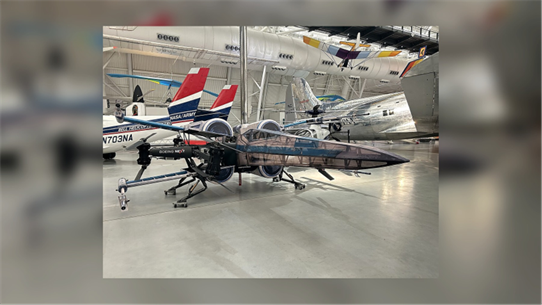
Boeing Cargo Air Vehicle, a real heavy cargo eVTOL platform, shows why industrial UAV power systems must support payload, thrust margin and reserve energy. Photo: मल्ल, CC0, via Wikimedia Commons.
For battery suppliers, that is an opportunity. Heavy-lift drone buyers are not shopping only for watt-hours. They are buying confidence in peak current, voltage stability, cell matching, thermal margin, BMS logic, connector safety, mechanical strength and documentation. A pack that performs well in a light-load test may not behave the same way when a drone lifts construction material in hot weather, hovers close to a building, or works repeatedly on a mountain route.
The first technical requirement is high-discharge capability. During takeoff, climb, payload pickup and position correction, current demand rises quickly. If the battery has high internal resistance or weak cell matching, voltage sag can reduce thrust margin and force the flight controller to work harder. The result may be shorter endurance, unstable hover, early low-voltage alarms or, in the worst case, a forced landing with a suspended load. A professional heavy-lift battery should be tested at mission-level current, not only at gentle laboratory discharge rates.
The second requirement is usable energy under load. A buyer may compare two packs with similar nominal capacity, but the pack that delivers more stable voltage at high current can be more valuable than the pack with the larger label number. Heavy-lift missions need reserve energy for return, controlled descent and unexpected wind. This is especially important when the aircraft operates over buildings, forests, steep slopes or utility sites where emergency landing options are limited.
The third requirement is thermal control. High current creates heat. Repeated lift cycles create more heat. Hot environments slow cooling, while cold environments reduce available power and may cause larger voltage drops. Battery packs for heavy-lift drones should be designed around cell spacing, heat paths, enclosure materials, sensor placement and charge/discharge temperature limits. If the pack is expected to work in winter, a low-temperature strategy may be needed. If it works in desert, rooftop or industrial environments, heat derating and operational guidance matter.
Mechanical design is just as important. A heavy-lift pack is often physically large, frequently handled, and exposed to vibration, dust, landing shocks and repeated connector cycles. The enclosure, internal fixing method, busbar or wire design, discharge connector, balance connector and mounting structure must be treated as engineering decisions. A connector that is acceptable for a small UAV may become a weak point when current is higher and handling is rougher. For export buyers, replaceable parts and clear maintenance instructions can reduce downtime.
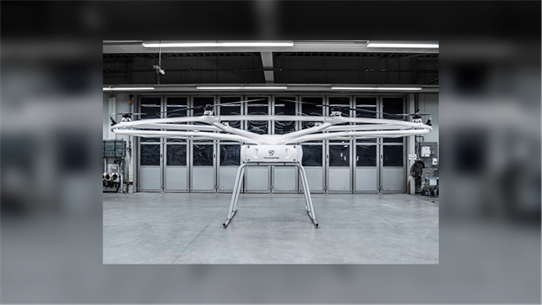
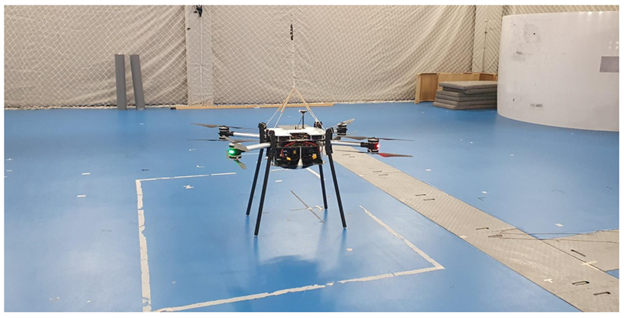
VoloDrone is a real cargo UAV platform; large multirotor cargo aircraft make high-current battery design, BMS data and thermal margin central to fleet reliability. Photo: SERU Film Produktion GmbH / Volocopter GmbH, CC BY 4.0, via Wikimedia Commons.
Smart BMS design separates an industrial battery from a simple cell pack. Heavy-lift operators need to know state of charge, cell voltage, pack voltage, current, temperature, fault history, cycle count and state of health. For fleet buyers, this data is not decoration. It helps decide which packs are safe for a lifting mission, which packs should be rested, and which packs should be removed before they create risk. As heavy-lift UAVs become more common in commercial work, battery data will increasingly become part of operational safety records.
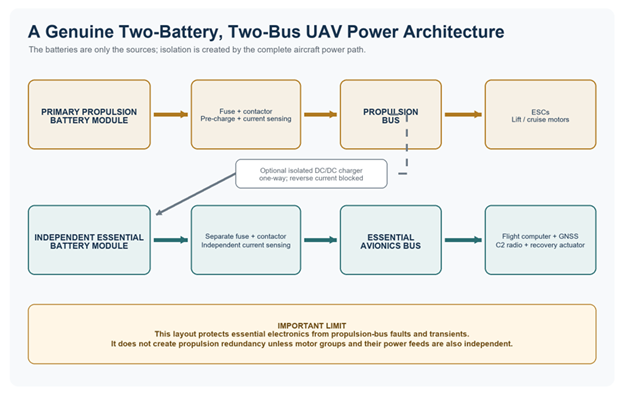
Pack architecture also deserves attention. Heavy-lift drones may use one large battery, dual packs, or multiple parallel packs depending on the aircraft design. Each approach has tradeoffs. A single pack can simplify installation, but it concentrates risk and may be harder to handle. Multiple packs can improve modularity, but they require careful matching, balanced aging and clear operating rules. If one pack in a multi-pack system is weaker than the others, it can become the limiting factor for the whole aircraft. For this reason, batch consistency, cell grading and pack-level traceability are not small details.
Charging strategy is another hidden cost driver. Heavy-lift UAV fleets often work in cycles: lift, land, swap or recharge, then lift again. Fast charging can improve daily productivity, but only if the battery, charger and cooling process are designed together. Aggressive charging without temperature control can shorten cycle life and create pack imbalance. For remote construction or utility jobs, the charging system may also need to run from generators, vehicles or temporary site power. A reliable supplier should discuss the battery and charger as one operating system.
Transport documentation should not be an afterthought. Lithium batteries are regulated goods in international logistics. IATA publishes lithium battery transport guidance for air cargo, and the UN Manual of Tests and Criteria includes the lithium battery testing framework commonly known as UN 38.3. [3][4] For a drone battery exporter, UN38.3 test evidence, MSDS, correct labeling, packaging and traceability help overseas customers move batteries through freight channels with fewer surprises. A buyer who receives a strong pack but weak documents still has a problem.
The application areas are expanding. In mountain construction, heavy-lift drones can move poles, tower components, cables, tools and supplies across terrain where manual transport is slow or dangerous. In building projects, they can lift roof components, small equipment and construction materials to difficult positions. In energy and utility work, they can support line-stringing, tower maintenance and remote-site logistics. In medical logistics and intersite cargo delivery, smaller cargo drones still face demanding power requirements because they must combine payload, range, reserve energy and repeatable dispatch. Each application has a different payload shape, flight profile and risk environment, so the battery should be matched to the mission instead of selected from a generic catalog.
For procurement teams, the best supplier conversations are specific. Ask for the continuous discharge current and peak current, but also ask under what temperature, cell age and test method those values were measured. Ask for a discharge curve at realistic payload current. Ask how the BMS handles overcurrent, overtemperature, undervoltage, cell imbalance and communication loss. Ask whether the pack has batch traceability and whether the charger is matched to the battery chemistry and BMS. Ask whether the pack can be customized for shape, connector, cable length, communication protocol, enclosure and mounting system.
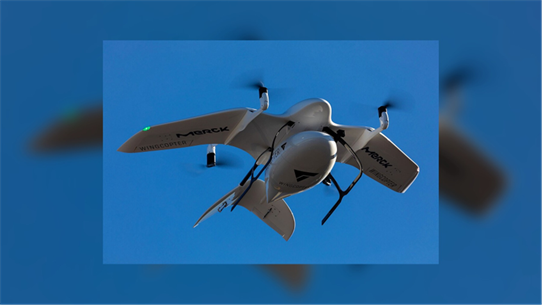
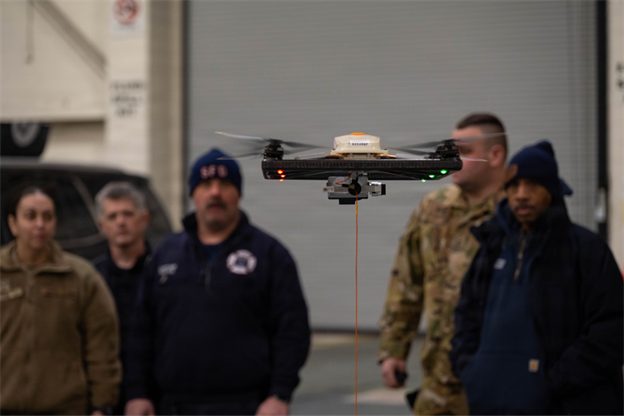
Wingcopter 178 HL in flight with a payload illustrates the lighter end of cargo UAV operations, where battery reserve, voltage stability and repeatable dispatch still matter. Photo: Akash 1997, CC BY-SA 4.0, via Wikimedia Commons.
Cost is real, but cheap power can become expensive quickly. A heavy-lift drone may carry a payload worth more than the battery itself, operate near workers, or fly in a location where recovery is difficult. A low-cost pack that creates voltage sag, unbalanced cells or unclear transport paperwork can cost more through aborted missions, damaged payloads, delayed export shipments or lost customer trust. This is why serious industrial buyers often move from price comparison to lifecycle comparison.
The future of heavy-lift UAV batteries will likely move in three directions. First, packs will become more data-rich, with stronger BMS communication and health tracking. Second, pack structures will become more mission-specific, because construction lifting, utility transport and emergency logistics do not use the same aircraft geometry. Third, documentation and traceability will become a visible part of the sales package, especially for international buyers who need repeat orders and compliant logistics.
Heavy-lift drones are exciting because they make aerial robotics physically useful. They do not just observe the world; they move material through it. But that usefulness depends on power systems that can deliver high current, stable voltage, safe thermal behavior and trustworthy data. For industrial UAV manufacturers, integrators and fleet operators, the battery is not the last accessory to choose. It is one of the first engineering decisions that determines whether heavy lifting becomes a reliable business model.
Heavy-Lift Battery Buyer Checklist
Use this checklist when comparing lithium battery suppliers for cargo drones, construction lifting drones, utility UAVs or other heavy-lift industrial platforms.
| Requirement | Why it matters | What buyers should ask |
| High-discharge performance | Takeoff, climb, hover and payload correction create current spikes. | Ask for continuous and peak current data under realistic temperature and load. |
| Voltage stability | Voltage sag can reduce thrust margin and trigger early alarms. | Request discharge curves at mission-level current, not only nominal capacity. |
| Thermal margin | Repeated lift cycles heat cells, connectors and internal conductors. | Review temperature sensors, derating logic and charge/discharge limits. |
| Mechanical structure | Large packs face vibration, handling, shock and repeated swaps. | Check enclosure, internal fixing, sealing, connector life and strain relief. |
| Smart BMS data | Fleet buyers need pack health before assigning a lifting mission. | Confirm SOC, SOH, cell voltage, temperature, current, cycle count and fault logs. |
| Export documents | Lithium batteries are regulated during transport. | Prepare UN38.3 evidence, MSDS, labels, packaging and batch traceability. |