BVLOS Drone Batteries: Why Industrial UAVs Need More Reliable Power
Beyond visual line of sight, usually shortened to BVLOS, is becoming the next serious chapter for industrial drones. The change is bigger than simply flying farther. In a visual-line-of-sight mission, the aircraft often works like a mobile camera near the pilot. In a BVLOS mission, the drone becomes a remote asset: it may inspect a power corridor, map a mine, monitor forestry, survey rail lines, check a port, or fly from an automated dock while the operator is far from the aircraft. That shift changes the buying logic for every critical component. The battery is no longer a replaceable accessory. It becomes part of the aircraft’s safety case, operating economics and customer trust.
The timing matters. In the United States, the FAA published a proposed rule in August 2025 to normalize certain BVLOS unmanned aircraft operations, and the Federal Register reopened the comment period in January 2026. The FAA’s BEYOND program also reported more than 532,000 flight operations, including 48,383 BVLOS operations, by September 30, 2025. [1][2] In Europe, EASA’s drone framework and U-space rules are moving the market toward more structured integration of drones into shared airspace. [3] The signal is clear: regulators are not treating BVLOS as a novelty. They are building the procedures, data requirements and airspace services that can make repeatable remote operations possible.

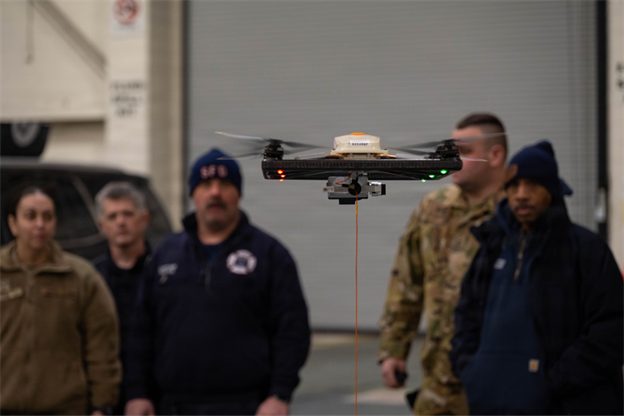
BVLOS missions make industrial drones useful over remote terrain and long routes; reliable batteries turn those routes into repeatable operations. Photo: Adyasha Dash, CC BY-SA 4.0, via Wikimedia Commons.
For battery buyers, BVLOS creates a sharper question: can the power system stay predictable when the mission becomes longer, more automated and less forgiving? Industrial operators already understand that nominal capacity printed on a label is not the same as usable energy in the field. A drone climbing with a payload, fighting wind, warming electronics, running navigation, recording high-resolution data and maintaining command-and-control links will not draw current like a laboratory discharge test. The more distance and autonomy the operation requires, the more important voltage stability, thermal behavior, state-of-health tracking and conservative reserve planning become.
This is also a maintenance issue, not only a flight-time issue. In a short inspection flight, a weak pack may simply lead to an early landing. In a BVLOS mission, the same weakness can affect route completion, emergency planning, payload recovery, insurance discussions and customer confidence. Fleet operators therefore need batteries that create a clear record: when the pack was produced, how many cycles it has completed, how it behaved under load, whether any cell group is drifting, and whether it should be removed before the next mission. Good battery data gives the remote pilot and maintenance team time to act before the aircraft is already far away.
This is why the FAA’s BVLOS proposal is worth reading beyond the headlines. The proposed framework discusses aircraft design expectations, continued operational safety, maintenance records, safety data and specific power-related concepts such as battery monitoring. [4] A professional industrial drone battery is not just a high-capacity pack. It should help the operator know whether the aircraft can finish the route, return safely, or trigger a controlled contingency action before a small issue becomes a lost aircraft. When BVLOS moves from experimental flights to routine fleet work, the battery must support decisions, not just motors.
The first application area is corridor inspection. Power lines, pipelines, roads, railways, canals and border infrastructure are natural BVLOS candidates because the value comes from covering long linear assets efficiently. In these missions, the drone may carry optical cameras, thermal cameras, LiDAR or gas-detection payloads. Each payload changes the weight, center of gravity and current draw. A battery supplier that only asks for voltage and capacity is missing the real engineering problem. The better question is: what route length, payload, wind margin, temperature range and landing reserve must the pack support every day?
The second application area is remote mapping and environmental monitoring. Forestry, mining, quarrying, coastal survey, agriculture research and disaster assessment often require flights over large or difficult terrain. Fixed-wing and VTOL drones are attractive here because they can cover more area than small multirotors, but their power system still has to handle launch, cruise, transition, payload operation and reserve energy. In these missions, battery consistency across batches can matter as much as peak performance. A fleet manager needs predictable pack-to-pack behavior so route planning does not become guesswork.
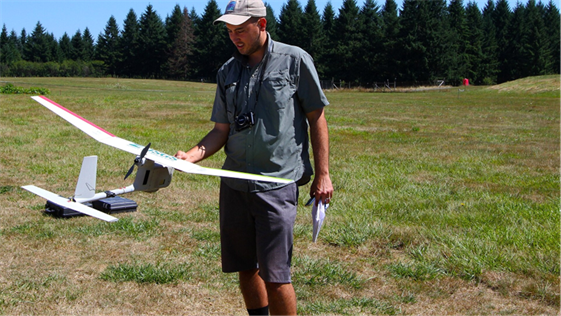
Fixed-wing UAV field work shows why BVLOS buyers care about usable energy, reserve planning and pack-to-pack consistency. Photo: BLM Oregon and Washington / USGS team, public domain.
The third area is dock-based industrial operation. Automated drone stations are becoming more common for mines, solar farms, ports, factories and security sites. The promise is attractive: scheduled flights, automatic charging or swapping, and remote monitoring with fewer people on site. The weak point is also obvious. If the battery ages faster than expected, charges unevenly, overheats in summer, or loses capacity after storage, the entire remote workflow becomes unreliable. For dock-based BVLOS, a battery pack should be designed as part of a charging ecosystem, not as a loose consumable.
Lithium batteries remain the practical choice for most electric industrial UAVs because they combine useful energy density, high discharge capability, flexible pack design and fast integration with battery-management electronics. Compared with fuel engines, electric power is cleaner at the point of use, mechanically simpler and easier to monitor digitally. Compared with basic hobby packs, an industrial lithium pack can be built around protected cells, communication interfaces, vibration-resistant structure, traceable production and documented transport compliance. The advantage is not only flight time. It is controllability.
That advantage becomes visible in procurement. A serious BVLOS battery specification should include rated voltage, usable capacity under mission load, maximum continuous and peak discharge current, cell chemistry, cycle-life test conditions, temperature range, connector type, enclosure material, sealing approach, pack weight, charging method, balancing strategy, fault protection, data output and documentation. For international buyers, transport paperwork also matters. Lithium batteries normally require UN 38.3 test evidence and supporting safety documentation before they move through regulated logistics channels. The UN Manual of Tests and Criteria remains the core reference for lithium battery transport testing. [5]
A practical way to evaluate suppliers is to ask for evidence instead of adjectives. ‘Long endurance’ is not enough. Ask for a discharge curve at realistic current. ‘Smart BMS’ is not enough. Ask which values can be read, how faults are logged, and whether state of health can be tracked at pack level. ‘Water resistant’ is not enough. Ask for the sealing design and test condition. ‘Fast charging’ is not enough. Ask how charging affects temperature rise and cycle life. In BVLOS procurement, the supplier that answers with test conditions often deserves more attention than the supplier with the biggest number on the brochure.
The future direction is clear. BVLOS drone batteries will become more data-driven, more mission-specific and more closely connected to fleet software. A pack will increasingly be expected to report cell voltage, total voltage, current, temperature, cycle count, state of charge, state of health and error history. For remote operations, this data helps operators schedule maintenance, remove weak packs before missions, compare performance by batch and protect the aircraft from avoidable power events. For exporters, it also creates a stronger sales story: the product is not a commodity cell box; it is a traceable power system.
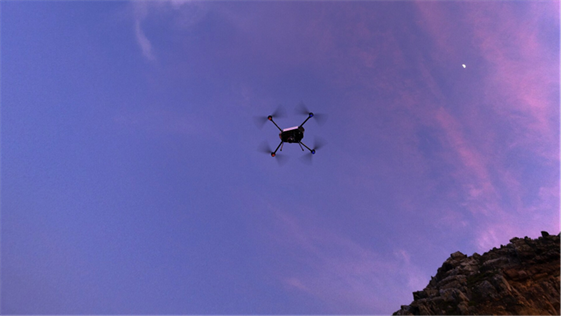
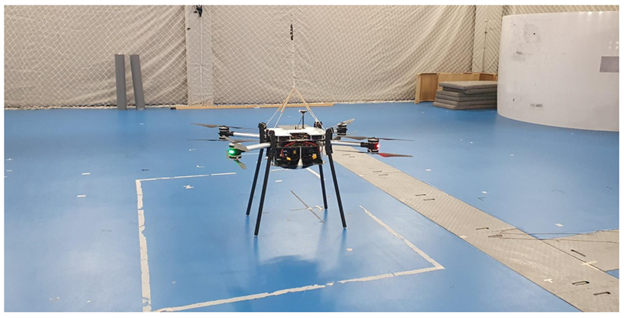
Industrial inspection flights depend on predictable power under real payload, wind and temperature conditions. Photo: Medusasami, CC BY-SA 4.0, via Wikimedia Commons.
Customization will also grow. A BVLOS platform used for corridor inspection may need a slim pack with strong vibration resistance. A mapping VTOL may need high energy density and stable voltage during transition. A dock-based multirotor may need predictable charging behavior and a connector designed for repeated automated contact. Cold regions may require heating strategy. Hot regions may require derating and thermal margin. Marine or industrial sites may require better sealing and corrosion awareness. This is where non-standard battery engineering becomes commercially important: the pack must match the aircraft, mission profile and service environment.
For drone manufacturers, integrators and fleet operators, the buying message is simple. BVLOS does not reward the cheapest battery. It rewards the battery that makes the mission repeatable. A reliable industrial UAV battery can reduce aborted flights, protect payloads, support regulatory documentation and make remote operations easier to trust. As BVLOS rules and operating models mature worldwide, battery suppliers that combine manufacturing flexibility, honest testing, smart BMS design and export documentation will be better positioned than suppliers competing only on price.
BVLOS is not the end of pilot judgment or operational discipline. It is a move toward better systems. In that system, the battery is one of the few components that directly touches safety, endurance, payload capacity, maintenance planning and logistics. If industrial drones are going to fly farther, more often and with fewer people standing beside them, their power systems must become more transparent, more robust and more professional. That is the real opportunity for industrial drone lithium batteries in the BVLOS era.
BVLOS Battery Buyer Checklist
Use this checklist when comparing industrial UAV battery suppliers for BVLOS or long-range operations. It is designed for procurement teams that need practical questions, not vague marketing claims.
| Requirement | Why it matters in BVLOS | What buyers should ask |
| Usable mission energy | Can the pack complete the mission under real payload, wind and reserve assumptions? | Ask for discharge curves at realistic current and temperature, not only nominal capacity. |
| Voltage stability | Will voltage sag disturb avionics, payloads or return-to-home logic? | Check continuous/peak current ratings, connector design and pack internal resistance control. |
| Smart BMS data | Can operators see risk before the aircraft is in the wrong place? | Look for cell voltage, current, temperature, SOC, SOH, cycle count and fault history. |
| Thermal design | Will the pack behave in cold mornings, hot afternoons or repeated dock charging? | Review test conditions, derating logic, heating/cooling strategy and charge temperature limits. |
| Mechanical fit | Will the pack survive vibration, handling, repeated swaps and outdoor sites? | Confirm enclosure material, mounting, sealing, connector life and strain relief. |
| Export readiness | Can the supplier support international logistics? | Request UN38.3 evidence, MSDS, labels, packaging details and traceable batch records. |