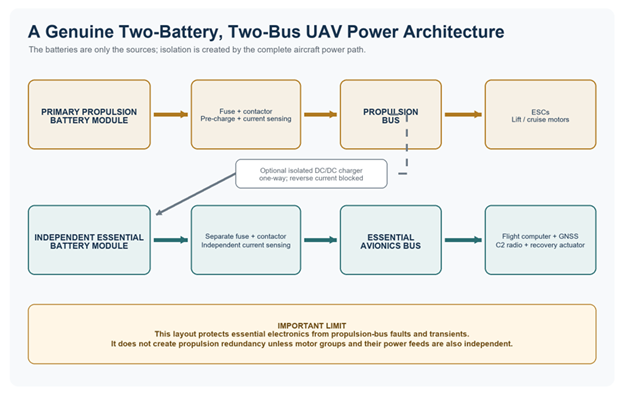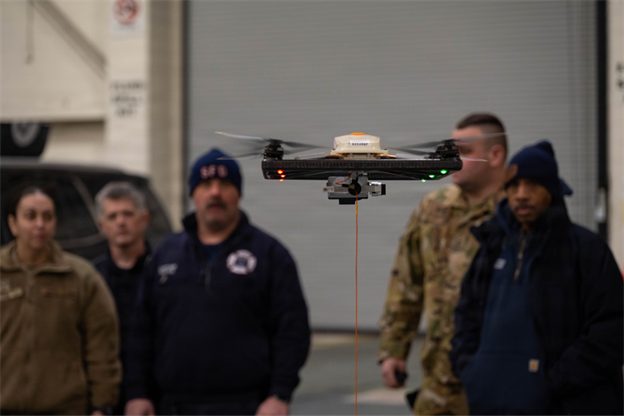
An industrial UAV battery can complete a successful prototype flight and still be a weak fleet product. One pack may meet the required endurance, stay cool and land with a comfortable reserve, while the next production lot delivers a wider voltage spread, higher resistance or inconsistent protection behavior. For an aircraft manufacturer or fleet operator, that difference is not a laboratory detail. It affects payload capability, maintenance workload, warranty risk and operational safety.
Batch validation is the discipline that turns a promising battery design into a repeatable industrial component. It connects aircraft requirements, cell screening, production controls, end-of-line testing, sampled reliability tests, mission-profile validation and traceable release records. The central rule is simple: a prototype proves that a design can work; batch evidence shows whether the supplier can build it consistently.
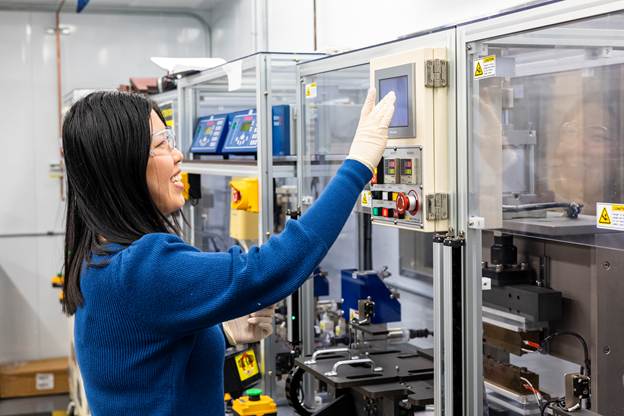
Battery consistency starts with controlled manufacturing processes, calibrated equipment and recorded production conditions. Photo: Oak Ridge National Laboratory / U.S. Department of Energy [8].
Why one successful flight is weak evidence
Industrial multirotors, fixed-wing VTOL aircraft and specialized inspection platforms expose batteries to a combination of high takeoff power, repeated peak-current events, vibration, limited cooling and changing ambient conditions. The load is also aircraft-specific. A pack that performs well on a light demonstrator may behave differently with a heavier payload, a different propeller and motor combination, or a colder charging environment.
A single result hides the distribution. It does not show whether the tested pack was typical, unusually strong or selected from the best-performing samples. It also says little about the next cell lot, a connector change, a BMS firmware update or a different assembly shift. Serious B2B buyers therefore need evidence that describes variation, not only a maximum-flight-time headline.
Validation starts with a frozen requirement
Before samples are built, the buyer and supplier should agree on the test definition. That definition should include nominal and full-charge voltage, rated capacity and watt-hours, minimum loaded voltage, continuous current, peak current and peak duration, working temperature, recommended charging temperature, mechanical envelope, connector, BMS communication, aircraft type, payload, landing reserve and intended market.
Test conditions must be equally explicit. Capacity, energy and resistance change with temperature, state of charge, rest time, current and cutoff voltage. A resistance value measured at 50% state of charge and 25 degrees C cannot be compared honestly with a value taken from a fully charged pack immediately after discharge. There is no universal capacity spread, DC resistance limit or sample size that is automatically correct for every industrial UAV. The release limits must come from the aircraft power budget, safety margin, architecture and contractual risk.
Four evidence layers – and why they are not interchangeable
| Evidence layer | Question answered | Typical evidence | Applies to |
| Design qualification | Can the design meet the defined mission and environment? | Performance, temperature, vibration, safety and aircraft-integration evidence | Battery design and BOM revision |
| Process qualification | Can the production line build it repeatably? | Pilot-lot data, controlled work instructions, calibrated equipment and process records | Factory line and approved process |
| Lot acceptance | Did this production lot remain under control? | Incoming distributions, audit samples, deviations and release review | Defined assembly lot |
| 100% end-of-line screen | Is this individual pack correctly assembled and functional? | Identity, polarity, BMS, sensors, voltage, pulse response and other agreed checks | Every released pack |
Table 1. Four evidence layers that should not be treated as interchangeable. Acceptance limits and sample sizes remain project-specific.
Confusing these layers is a common sourcing error. UN transport testing does not replace aircraft integration testing. A strong type-qualification report does not prove that every production pack was wired correctly. A complete end-of-line screen cannot replace long-duration cycling or destructive safety work. A credible validation plan assigns each question to the correct evidence layer.
Gate 1: Incoming cells and components must remain traceable
The first production gate is not pack assembly. It is control of the incoming materials. For cells, the supplier should retain production-lot identity and measure agreed attributes under controlled conditions. Depending on the project, these may include open-circuit voltage after stabilization, capacity or energy, DC resistance at a defined state of charge and temperature, mass, pouch thickness, self-discharge after a dwell period, and visual inspection of tabs and seals.
The same traceability should extend to the BMS hardware revision, firmware checksum, current sensor, thermistors, connector, high-current cable, insulation material, busbar or tab interconnection, structural parts and adhesives. The term ‘Grade A cell’ is not a validation result. A buyer needs to know how the cells were measured, what limits were applied, how outliers were handled and whether the installed cells can be linked to the incoming lot.
Gate 2: The assembly process needs its own evidence
Matching cells cannot compensate for an unstable pack process. Weld energy, joint resistance, crimp quality, cable routing, fastener torque, sensor placement, insulation, pouch support and adhesive cure can all influence pack behavior. Critical operations should have controlled work instructions, calibrated tools and recorded results. Where appropriate, destructive pull tests or sectioning can be performed on process coupons or audit samples rather than finished saleable packs.
A golden sample is useful for visual and functional comparison, but it cannot replace numerical limits. The better approach is a control plan that defines the characteristic, measurement method, frequency, reaction plan and responsible owner. Changes to the cell source, BMS, firmware, connector, cable, insulation, structural material or manufacturing method should trigger a documented review. Some changes require only record updates; others require partial or full requalification.
Gate 3: Every released pack needs an end-of-line record
End-of-line testing answers a narrow but essential question: is this individual pack correctly assembled and functional? A practical screen can verify model identity, serial number, polarity, pack voltage, cell-group voltage spread, BMS communication, temperature-sensor plausibility, current-sensor zero, sleep and wake behavior, balancing control, protection functions, connector integrity and insulation resistance where the architecture requires it.
Electrical performance should also be checked with an agreed method. Depending on production volume and risk, the plan may use a full charge-discharge energy test, a controlled pulse test, a validated shorter proxy, or a combination. The method must be correlated to the characteristic that matters in flight. Raw results should be stored against the serial number. A printed ‘PASS’ without measurement data provides little value when a fleet issue must later be traced.
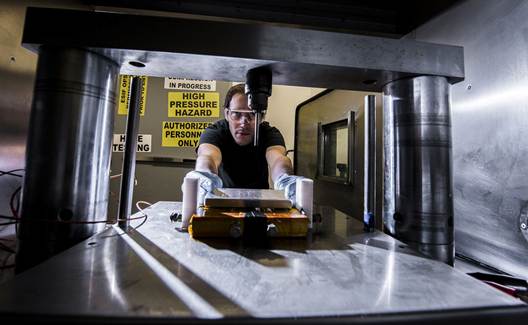
Battery scientist Nathan Sunderlin prepares a pouch cell for puncture testing in a high-pressure containment chamber. Destructive safety work belongs to design qualification or controlled audit sampling, not routine testing of every saleable pack. Photo by Dennis Schroeder, National Laboratory of the Rockies [9].
Gate 4: Lot-level audit samples must test the tails
A batch can pass 100% functional screening and still contain a reliability risk that appears only after cycling, vibration or thermal exposure. Lot-level audit samples are used for deeper tests such as extended cycling, high-current thermal mapping, temperature operation, vibration, mechanical shock and selected safety evaluations. The exact plan should be risk-based, agreed before production and linked to the design’s failure modes.
Testing every pack to failure is impossible; testing too few samples can miss the tail of the distribution. The compromise is a documented sampling plan with defined selection rules, acceptance criteria and escalation actions. Random or systematically distributed samples are more informative than units hand-picked because they already look good. If an audit fails, the response should define containment, expanded inspection, root-cause analysis and the conditions for lot release or rejection.
Gate 5: Bench validation must reproduce the mission profile
A constant-current capacity test is necessary, but an industrial UAV rarely draws constant current. A useful bench profile should reproduce takeoff, climb, hover or cruise, payload work, gust response, descent and landing reserve using the aircraft’s actual current and voltage limits. Cooling, enclosure, mounting orientation and ambient temperature should be representative. Data should include minimum loaded voltage, voltage recovery, energy delivered, cell-group spread, temperatures at multiple points and any BMS warnings or protective events.
The final integration step is flight validation with the real aircraft. Reports should identify the aircraft model, propulsion configuration, battery revision, payload mass, weather, route or maneuver profile, takeoff state of charge, landing reserve and number of packs tested. A flight-time number without those conditions is not reproducible evidence. The purpose is not to manufacture an impressive record; it is to confirm that the release limits protect the aircraft under realistic operation.
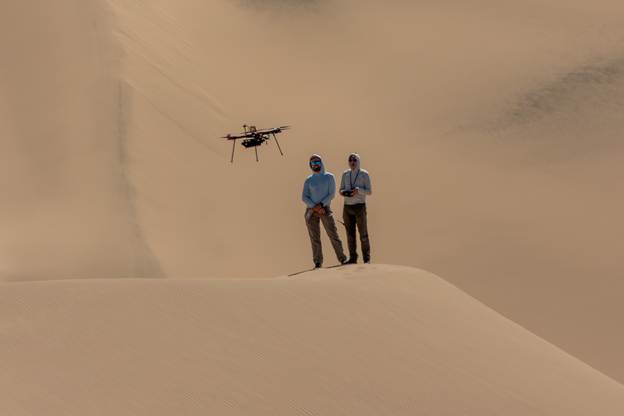
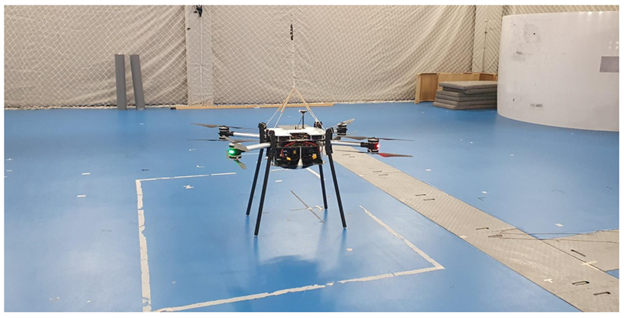
A custom research multirotor is evaluated in the Mojave Desert. Aircraft-level validation should record the exact airframe, payload, environment, power profile and landing reserve. Photo: NASA/JPL-Caltech [10].
The data problem: test conditions can create different answers
A 2024 open-access study examined 217 commercial NMC/graphite cells from the same production batch. Eighty cells were aged in ten groups of eight across temperatures from 0 to 40 degrees C and at 0.5C or 1.0C charge-discharge rates. The results were not a drone-pack qualification, but they clearly demonstrate why batch data must always state the operating conditions [6].
At 20, 30 and 40 degrees C, the 0.5C groups reached an average of 484, 518 and 760 equivalent full cycles before reaching 80% state of health. Under 1.0C at the same temperatures, the averages were 82, 179 and 325 cycles. At 0 degrees C, the corresponding averages were only 28 and 15 cycles. The researchers linked the high-variation conditions to proximity to lithium plating and also reported that similar initial parameters did not guarantee similar subsequent ageing in their experiment.
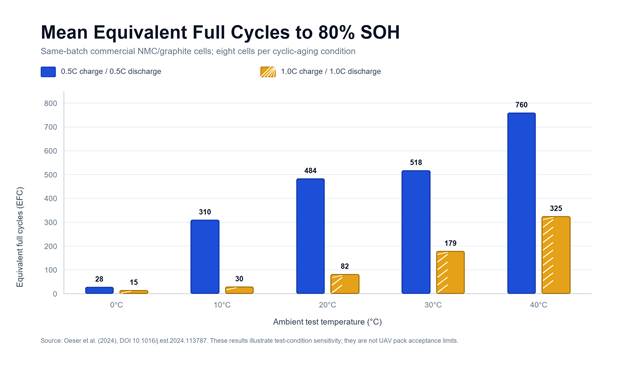
Figure 1. Mean equivalent full cycles to 80% SOH in the Oeser et al. test matrix. The chart illustrates condition sensitivity and must not be used as a universal UAV battery acceptance limit [6].
For industrial UAV sourcing, the message is practical: a supplier should not compare batches measured at different temperatures, C-rates, rest periods or cutoff voltages. Initial matching remains useful, but it is not a warranty of identical ageing. Qualification should include the demanding parts of the real charging and flight environment, and production records should preserve the conditions under which each value was obtained.
Gate 6: Compliance documents and batch release serve different purposes
Lithium batteries offered for transport must meet the applicable transport rules. The UN Manual of Tests and Criteria subsection 38.3 defines type tests for lithium cells and batteries, and the 2026 IATA guidance describes the information required in a test summary, including manufacturer and laboratory details, report identification, date, mass, watt-hour rating, model numbers, tests conducted and pass-fail results [4][5]. The model shown on the summary should match the product being shipped.
These records are essential, but they are not proof that every production lot meets an aircraft’s endurance, peak-power or thermal requirements. They should sit beside the batch release package, not replace it. Depending on the UAV category and market, relevant technical references may also include ISO 24352:2023 for small unmanned-aircraft electric energy systems below 25 kg MTOM, ASTM F3005-22 for sUAS batteries, and the new SAE JA1016 recommended practice for dimensional and performance reporting of Group 1 sUAV pouch cells [1][2][3]. Their scopes must be checked rather than assumed to cover every heavy industrial UAV.
Traceability is also becoming a market-access issue. Under the EU Batteries Regulation, an industrial battery above 2 kWh that falls within the rule’s scope must have an electronic battery passport from February 18, 2027. The same regulation already requires performance and durability documentation for rechargeable industrial batteries above 2 kWh [7]. For exporters, serial-level data, model control and change history are therefore commercial infrastructure, not administrative decoration.
What an industrial UAV buyer should request
| Buyer should request | What credible evidence looks like |
| Requirements | Aircraft model, payload, voltage window, continuous and peak current, peak duration, ambient range, altitude, landing reserve and charging conditions |
| Distribution data | Capacity or energy, DC resistance, mass, dimensions and self-discharge distribution for the relevant cell and pack lots – not only one typical value |
| Production evidence | BOM revision, cell-lot traceability, BMS hardware and firmware revision, critical process records, calibration status and deviation history |
| Release evidence | Serial-number list, end-of-line results, lot-acceptance report, Certificate of Conformity and approved specification revision |
| Compliance evidence | Applicable UN 38.3 test summary and market-specific documentation, with model numbers matching the product being shipped |
| Flight evidence | Aircraft model, payload mass, current profile, weather assumptions, flight time, lowest loaded voltage, temperature data and landing reserve |
Table 2. A practical evidence request for industrial UAV battery sourcing and supplier qualification.
The most efficient RFQ starts with the aircraft’s real power profile. Buyers should provide nominal voltage, minimum allowable loaded voltage, rated capacity or energy target, continuous current, peak current, peak duration, working temperature, charge temperature, aircraft model, payload, target flight time, landing reserve, connector, communication interface and mechanical envelope. The supplier should return a validation matrix showing which requirements are covered by design qualification, process qualification, lot acceptance and 100% end-of-line testing.
The real product is repeatability
Industrial drone batteries are not commodities once they become part of an aircraft power system. Their value is not defined only by the highest measured watt-hours or the best prototype flight. It is defined by repeatable output, controlled variation, aircraft-specific evidence and the ability to trace every released pack back to the design, materials, process and test data that produced it.
For an OEM or fleet operator, that evidence reduces integration surprises and makes supplier decisions defensible. For a battery exporter, it creates a stronger position than price-only competition. The supplier that can explain exactly how a batch was validated – and provide the records to prove it – is offering an industrial component rather than an anonymous pack.
Sources and references
[2] ISO. ISO 24352:2023, Technical requirements for small unmanned aircraft electric energy systems.
[5] IATA. Guidance Document for Lithium Batteries and Sodium Ion Batteries – 2026.
[8] Oak Ridge National Laboratory. Battery Manufacturing Facility. Updated December 19, 2025.
[10] NASA. Testing Drones for Mars in the Mojave Desert. December 5, 2025.