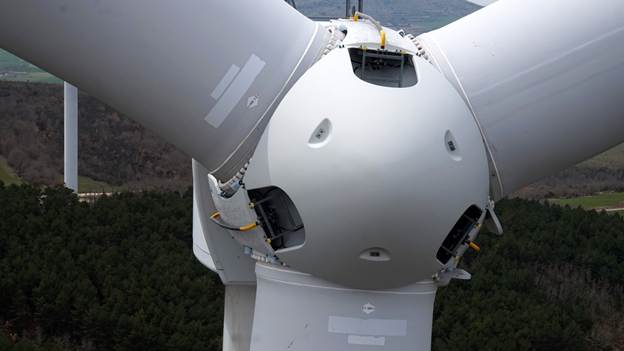
Industrial drone missions around wind and energy infrastructure need batteries that deliver predictable power under real field conditions. Photo: smart-drone.es, Wikimedia Commons, CC BY 4.0.
How to Choose Drone Batteries for European UAV Operations
European UAV buyers are no longer shopping for drone batteries as simple spare parts. In inspection, agriculture, mapping, security and automated drone operations, the battery affects mission time, safety, maintenance cost and whether a fleet can work reliably day after day. A weak or poorly documented battery may look inexpensive at first, but it can quickly become the reason a drone returns early, a project is delayed, or a customer loses confidence in the entire system.
This is why the best drone lithium battery for European operations is not always the one with the biggest capacity number. It is the battery pack that matches the mission, handles real load conditions, provides useful BMS data, ships with the right documents and remains consistent across batches. For buyers, integrators and fleet operators, choosing the right battery supplier is now part of building a professional UAV business.
Start With the Mission, Not the Battery Label
The first mistake in battery selection is asking only for more mAh or more Wh. Capacity matters, but it is only one part of the decision. A survey drone, a spraying UAV, a wind turbine inspection platform and a drone-in-a-box system all draw power differently. The same battery that works well for mapping may be unsuitable for a heavy-lift agricultural aircraft that needs repeated high-current takeoffs.
European buyers should begin with a clear mission profile: payload, target flight time, peak current, average current, daily flight cycles, operating temperature, charging workflow, transport route and required documentation. With this information, a supplier can recommend a pack based on energy density, power density, cell chemistry, BMS function, connector design and thermal margin. Without it, the conversation becomes guesswork.
Energy density helps a drone fly longer with less weight. Power density helps it handle takeoff, hovering, wind resistance and payload changes. The U.S. Department of Energy uses these concepts to explain lithium-ion battery performance, and they are especially important in UAV design because every gram and every amp matters. For professional buyers, the useful question is not “What is the biggest battery?” but “What is the safest and most efficient battery for this aircraft and mission?”
What European Buyers Usually Care About
European UAV customers tend to be careful buyers. They ask for specifications, but they also ask for evidence. A serious battery pack should make key data easy to check: nominal voltage, capacity, watt-hour rating, discharge rate, maximum continuous current, charge protocol, cycle-life test conditions, storage recommendations and operating temperature range.
The BMS is just as important as the cells. A smart drone battery should monitor cell voltage, pack temperature, state of charge, state of health, cycle count and fault history. For a single aircraft, this information helps the pilot avoid bad decisions. For a fleet, it becomes a maintenance tool. Operators can identify ageing packs, remove abnormal batteries and reduce the risk of mission failure.
Mechanical design also matters. Drone batteries are handled frequently, often in dusty fields, vans, rooftops or industrial sites. Connectors, locking structures, shell strength and waterproofing are not cosmetic details. If a connector wears quickly or a pack does not lock securely, the battery becomes a field problem even if the cells are good.
Inspection and Energy Infrastructure: Reliability Comes First
Energy and infrastructure inspection is one of the clearest commercial use cases for UAVs in Europe. Wind turbines, solar farms, power assets, railways, bridges and industrial facilities all need regular inspection. Drones can reduce manual climbing, shorten inspection time and collect data from safer angles. But these missions are often performed in windy, remote or time-sensitive conditions.
For this type of work, reliable power delivery is more valuable than exaggerated endurance claims. A good battery should hold stable voltage under load, resist overheating during repeated flights and provide enough reserve margin for safe return. If the drone is used near wind turbines or large industrial assets, operators also need confidence that the battery will not sag unexpectedly during positioning or return-to-home.
This is where documentation becomes part of the sale. European inspection companies are often serving utilities, renewable-energy owners or engineering firms. They may need to show that their equipment is maintained and that safety procedures are controlled. A battery supplier that can provide clear specifications, test summaries and batch traceability gives the operator something useful beyond the product itself.
Agriculture and Field Work: Fast Turnaround Wins
Agricultural UAVs have a different battery challenge. They often work with payload, vibration, dust, moisture and repeated high-current discharge. For these users, the most important value is not only longer flight time. It is how many reliable missions can be completed in a working day.
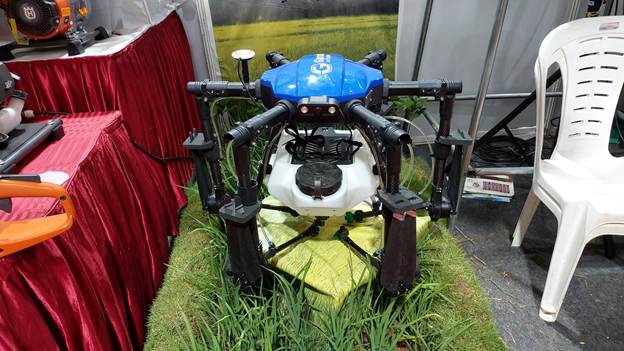
Spraying UAV platforms make battery selection practical: payload, discharge rate, connector durability and fast turnaround all affect daily productivity. Photo: Vis M, Wikimedia Commons, CC BY-SA 4.0.
A battery for agricultural drones should support fast swapping, durable connectors and stable performance over many charge-discharge cycles. If a team needs to stop for long charging breaks or replace damaged connectors too often, the daily operating cost increases. A well-designed battery pack helps reduce downtime and makes service work easier to schedule.

Agricultural UAV work shows why high-discharge performance, fast swapping and durable connectors matter more than headline capacity alone. Photo: Shreesha Sharma, Wikimedia Commons, CC BY-SA 4.0.
European agricultural operators may also care about storage and seasonal use. Some batteries may sit for long periods between busy seasons. Clear storage voltage guidance, charger compatibility and BMS protection can help extend service life and reduce avoidable failure. These practical details are often more persuasive than broad marketing claims.
BVLOS and Automated Operations Need Smarter Batteries
Europe’s drone regulatory environment is moving toward more structured, digital and risk-based operations. EASA’s framework separates operations into open, specific and certified categories, and U-space rules are designed to support more advanced drone traffic management in defined airspace. For battery buyers, the main lesson is simple: as operations become more professional, the battery must become more traceable and more connected.
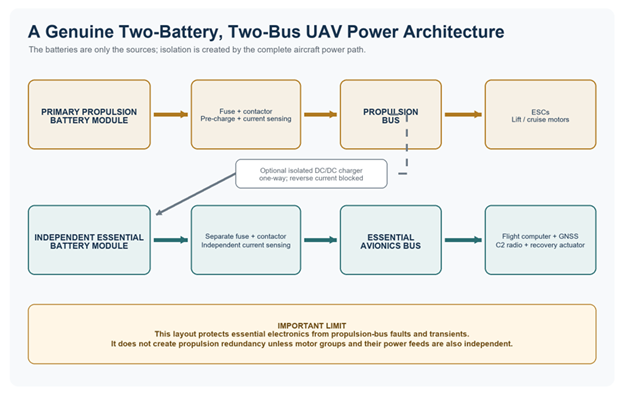
Drone-in-a-box platforms and BVLOS-style operations require batteries that can report their condition before launch. A dock, charger or cloud platform should be able to understand whether a pack is charged, healthy and safe to use. In automated environments, the battery is no longer checked by hand before every flight. Data quality becomes part of safety.
For suppliers, this creates a strong product direction: smart UAV batteries with communication, pack identification and health monitoring. The battery should help the operator manage the fleet, not simply power the aircraft.
Compliance Is Not Decoration
For European customers, compliance documents are not afterthoughts. Lithium batteries are regulated in transport, and international buyers commonly ask for UN 38.3 test documentation, safety data sheets, watt-hour ratings and proper packaging information. Missing documents can delay shipment, create customs problems or make a buyer question the supplier’s professionalism.
The EU Batteries Regulation also shows the direction of the market. Europe is placing more attention on sustainability, safety, labelling, information, due diligence and responsible end-of-life handling. Not every drone battery pack will face the same obligations at the same time, but buyers increasingly expect suppliers to understand these topics. A factory that can prepare structured documents and explain its process will stand out from suppliers that only compete on price.
This is good news for serious exporters. In Europe, trust is a commercial advantage. Real test conditions, honest performance claims and clean documentation can make a battery brand more convincing than a low price with unclear quality control.
Avoid Overpromising Flight Time
One of the easiest ways to lose credibility with European buyers is to promise fixed flight time without context. Flight time depends on payload, wind, propellers, aircraft efficiency, temperature, altitude, flight mode and battery ageing. A responsible supplier should explain the conditions behind any endurance claim.
A better marketing message is practical and verifiable: typical flight time under stated payload, recommended current range, charge-discharge cycle assumptions, temperature limits, BMS protections and storage recommendations. This style may sound less dramatic, but it is exactly what professional buyers need before they can trust a new supplier.
How a Strong UAV Battery Supplier Can Win in Europe
A strong supplier should behave like an engineering partner. That means asking about the aircraft, the mission and the operating environment before recommending a pack. It also means offering stable batch quality, flexible customisation, connector options, charger compatibility, clear labelling, realistic lead times and after-sales support.
For buyers, the right supplier is the one that reduces uncertainty. Can the battery support the required current? Is the pack protected against misuse? Are documents ready for shipping? Can the supplier repeat the same quality in the next batch? Can the BMS provide the data needed for fleet maintenance? These questions are more important than a single attractive specification.
Conclusion
European UAV operations are becoming more practical, regulated and data-driven. That creates a strong opportunity for drone lithium batteries that are safe, traceable and built for real missions. Inspection teams need reliability. Agricultural operators need fast turnaround. Automated platforms need battery data. All of them need documentation they can trust.
For European buyers, a good drone battery is not just a power source. It is part of the aircraft’s safety, productivity and operating cost. For exporters, the winning message is clear: provide reliable UAV battery packs, prove performance with honest data, support compliance, and help customers fly more safely and more efficiently.