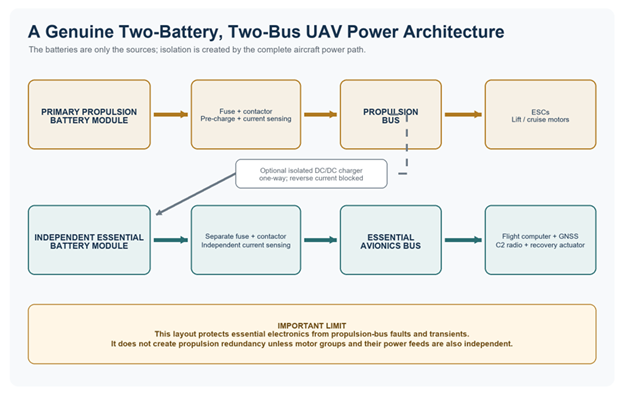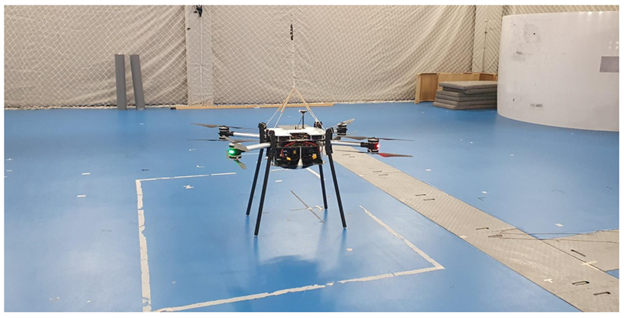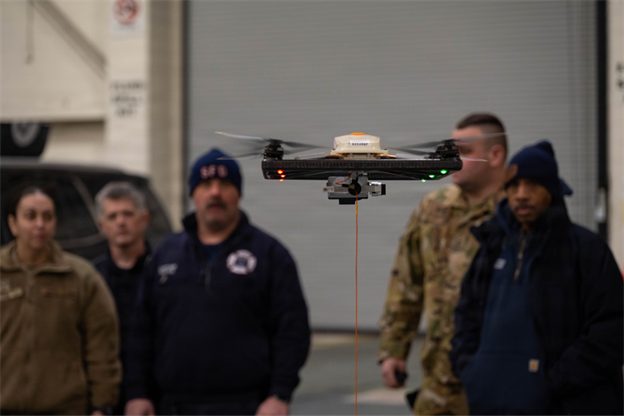
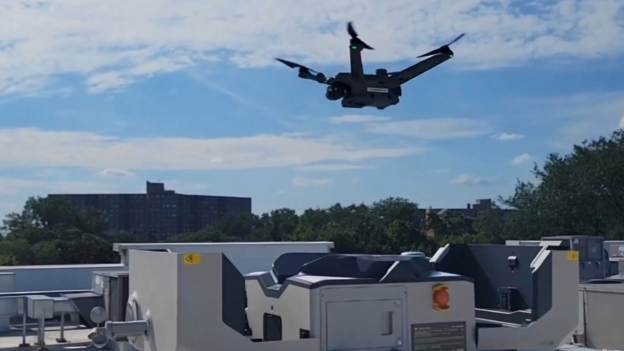
Drone-in-a-box and docked operations make fast, safe energy replenishment a business-critical feature. Photo: Chiam Naiditch, Wikimedia Commons, CC BY 4.0.
Drone Lithium Batteries in 2026: Smart Swapping for Industrial UAV Fleets
The most useful way to promote drone lithium batteries in 2026 is not to promise a magical jump in flight time. The stronger overseas story is practical: smart lithium battery systems built for fast swapping, drone-in-a-box docks, and repeatable industrial missions. For professional UAV operators, the battery is no longer just a spare part. It is a mission asset that affects uptime, safety, maintenance cost, and the number of flights a fleet can complete every day.
This week’s public drone-battery conversation points in the same direction. Industry articles and supplier updates are paying attention to automatic battery replenishment, drone docks, BVLOS operations, low-altitude economy infrastructure, and safer high-cycle lithium packs. That makes “smart battery swapping for industrial drones” a more credible Google angle than a generic “high-capacity UAV battery” message. It speaks to what overseas B2B buyers actually evaluate: downtime, traceability, safety files, lifecycle cost, and compatibility with automated operations.
Why the Market Is Moving Beyond Simple Flight Time
The low-altitude economy is shifting from concept to operation. According to the Civil Aviation Administration of China (CAAC), by the end of March 2026 China had more than 3.8 million real-name registered drones and more than 430,000 licensed operators. In 2025, drones accumulated 45.3 million flight hours, up nearly 70% year over year. CAAC also reported around 1,200 medium and large drone manufacturers, more than 40,000 operating companies, over 300,000 agricultural drones, and service coverage across 460 million mu of farmland.
These numbers matter to international buyers because they show how quickly drones become operational infrastructure once scale appears. In a consumer market, the key question is, “How long can it fly?” In an industrial fleet, the questions change: How many missions can one aircraft complete per day? How quickly can the pack be replaced? Can every battery report state of charge, state of health, temperature history, cycle count, and fault records? Can the operator retire a weak pack before it causes a failed mission?
Why Lithium Batteries Still Lead Drone Power
Lithium-ion chemistry remains central to UAV power because drones are extremely sensitive to weight. The U.S. Department of Energy defines energy density as the amount of energy stored relative to mass, and power density as the amount of power that can be generated relative to mass. Drones need both. Energy density supports flight duration, while power density supports takeoff, hovering, wind resistance, heavy payloads, and emergency maneuvers.
China’s lithium battery supply chain gives UAV battery suppliers a strong manufacturing base. Official MIIT-related data show that China’s lithium battery output reached 1,170 GWh in 2024, up 24% year over year, with total industry value above RMB 1.2 trillion. Output included 84 GWh of consumer batteries, 260 GWh of energy-storage batteries, and 826 GWh of power batteries. For overseas buyers sourcing UAV battery packs, this scale can support cell selection, BMS development, pack engineering, testing, and faster customization.
At the same time, low-altitude aviation raises the bar. China’s General Aviation Equipment Innovation Application Plan (2024-2030), issued by MIIT, MOST, the Ministry of Finance, and CAAC, calls for mass production of 400 Wh/kg-class aviation lithium batteries and application validation of 500 Wh/kg-class aviation lithium batteries. The signal is clear: energy density will keep improving, but commercial adoption depends on safety, cycle life, power output, consistency, and compliance readiness.
The Product Direction: Smart UAV Batteries for Battery-Swapping Operations
A strong product position for an independent website is: Smart UAV Battery for Battery-Swapping Drone Operations. This is not one number on a specification sheet. It is a system-level value proposition for operators that need fast turnaround and predictable fleet performance.
- Swap-ready mechanical design: rugged housing, reliable locking structure, durable contacts, and connector geometry for docked or semi-automated battery replacement.
- Intelligent BMS data: SOC, SOH, cycle count, temperature, voltage balance, battery identity, and fault history for fleet-level asset management.
- High-rate discharge with controlled heat: stable output for heavy takeoff, spraying, inspection in wind, emergency response, and payload-intensive missions.
- Wide-temperature and rugged operation: performance designed for hot, cold, humid, dusty, and high-cycle working environments.
- Traceable compliance package: clear Wh rating, discharge conditions, lifecycle test method, batch traceability, and UN38.3 or transport-safety documentation.
This positioning works well overseas because it avoids exaggeration. A professional buyer does not need another vague promise of “long endurance.” They need a battery platform that reduces turnaround time, makes maintenance easier, and gives the operator enough data to manage risk. In that sense, the battery becomes part of the automation layer, not just the energy container.
Where Demand Comes From
Agricultural drones are one of the clearest use cases. Crop-protection operations often require heavy payloads, high discharge rates, fast charging or swapping, and work in humid, dusty, or hot environments. For these customers, connector durability, cycle life, pack identification, shell protection, and charging strategy can influence daily acreage more than a headline flight-time number.
Inspection and security fleets are another major opportunity. Power-line inspection, solar-farm inspection, pipeline patrol, perimeter security, and public-safety monitoring increasingly depend on drones stationed in remote docks. The aircraft takes off, collects data, returns, replenishes energy, and uploads mission records with minimal human intervention. The U.S. FAA’s proposed Part 108 framework for BVLOS operations is one example of how regulators are preparing for routine and scalable low-altitude drone operations. In this environment, batteries must be inspectable, recordable, and maintenance-friendly components of the UAV system.
Emergency response and logistics will push the same trend. Emergency teams need standby readiness and fast launch. Logistics operators care about cost per route, battery turnover, and predictable maintenance. China’s low-altitude economy standardization guidelines aim to establish a basic standard system by 2027 and more than 300 standards by 2030. As standards mature, battery suppliers will compete on documentation, quality control, test transparency, and after-sales traceability as much as on capacity.
How to Market the Battery Without Overclaiming
Overseas customers are often skeptical of aggressive battery claims. A credible article should avoid phrases such as “unlimited flight,” “all-day drone power,” or “maximum endurance in all conditions.” Flight time depends on payload, wind speed, temperature, altitude, flight mode, propeller setup, motor efficiency, and battery aging. The better approach is to publish verifiable conditions: typical flight time under stated payload and temperature, recommended discharge rate, charging method, cycle-life test conditions, BMS communication protocol, protection logic, and transport documentation.
Safety language should also be direct. The FAA warns that lithium-ion batteries may enter thermal runaway if damaged, overheated, exposed to water, overcharged, or improperly protected. A professional UAV battery supplier should not hide this reality. Instead, the supplier should show how the pack addresses thermal design, cell balancing, overcharge and over-discharge protection, short-circuit protection, shell design, drop-test thinking, storage guidance, and shipping compliance. In Western B2B markets, honest safety communication often builds more trust than inflated performance claims.
Future Roadmap: From Battery Pack to Low-Altitude Energy Infrastructure
From 2026 to 2028, the most commercially relevant upgrade will be intelligence. Drone batteries will need to communicate with aircraft, chargers, docks, and cloud platforms. Fleet operators will expect pack-level data, predictive maintenance, retirement thresholds, and clearer control over mission risk. A battery that cannot report its own condition will feel outdated in automated operations.
From 2028 to 2030, higher-energy aviation cells, semi-solid-state and solid-state designs, safer electrolytes, lighter pack structures, and faster replenishment systems will continue to advance. But the winning commercial products will not be the ones with the loudest laboratory number. They will be the products that pass safety validation, remain consistent across batches, control lifecycle cost, and help drones return to service safely and repeatedly.
Conclusion
For Google promotion, the most attractive direction is clear: smart, safe, battery-swapping-compatible lithium batteries for industrial UAV fleets. The angle is specific enough for search, practical enough for overseas B2B buyers, and broad enough to serve agriculture, inspection, security, emergency response, logistics, and drone-in-a-box platforms. The future of drone batteries is not only about staying in the air longer. It is about getting back in the air faster, safer, and with better data every time.
If you are selecting a UAV battery supplier, start with the mission profile: payload, target flight time, daily cycles, charging or swapping workflow, operating temperature, communication interface, and certification requirements. The right drone lithium battery does more than power a flight. It powers a repeatable business model.
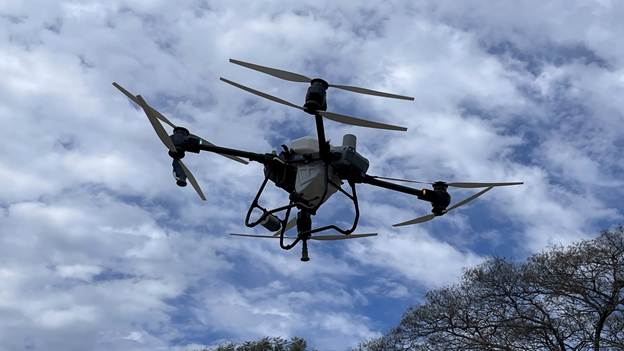
Industrial/agricultural drones turn battery performance into real mission productivity. Photo: Blervis, Wikimedia Commons, CC0.
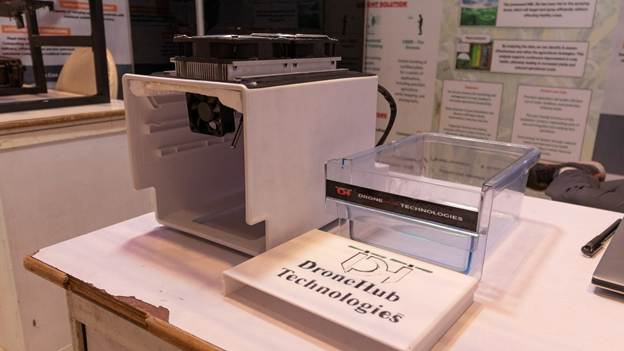
Thermal management, BMS data, and pack structure decide whether a UAV battery can serve high-frequency operations. Photo: iMahesh, Wikimedia Commons, CC BY-SA 4.0.